Veesion, the software that continuously analyzes your cameras
Veesion, the software that continuously analyzes your cameras, has a duty to respect certain commitments. That is why we invite you to read them here.
Veesion relies on a technological solution that makes it possible to detect suspicious behavior that could potentially harm property or people. Shoplifting is a scourge for retailers but also for consumers, as the cost of theft is passed on in the price of products.
We have developed a solution against shoplifting while respecting the legal framework in force (the French internal security code and the GDPR), and we do not carry out any processing of biometric data. Making this artificial intelligence available to retailers obliges us to fully assume our responsibilities with regard to the expectations of our clients, their customers and all of our stakeholders.
For us, our work cannot and must not be done without subscribing to the highest ethical standards. To this end, several essential commitments guide our development and that of our technology, commitments that are also subject to an ethics charter. Hiring at Veesion is therefore conditional on signing the charter and on their commitment to comply with it fully.
Shoplifting, a scourge for retailers but also for consumers
The mission we have set ourselves is to help store managers and retailers face the scourge of shoplifting, which is a criminal offense.
Every store is affected: large retail chains but also local neighborhood stores. Unknown shrinkage represents more than €7 billion in losses per year in France (total estimated losses; sources: ConnexIT, Bizerba, 2024), or between 1% and 2% of revenue at the level of a single store, and leads to bankruptcies, layoffs and price increases.
In the current context of shrinking retail margins, and of physical retail’s growing loss of market share to e-commerce, we believe it is all the more important to help retailers equip themselves with the right tools to fight in-store theft.
These anti-theft tools, such as Veesion, help protect the purchasing power of French people, as in-store theft now weighs on the prices paid by all consumers.
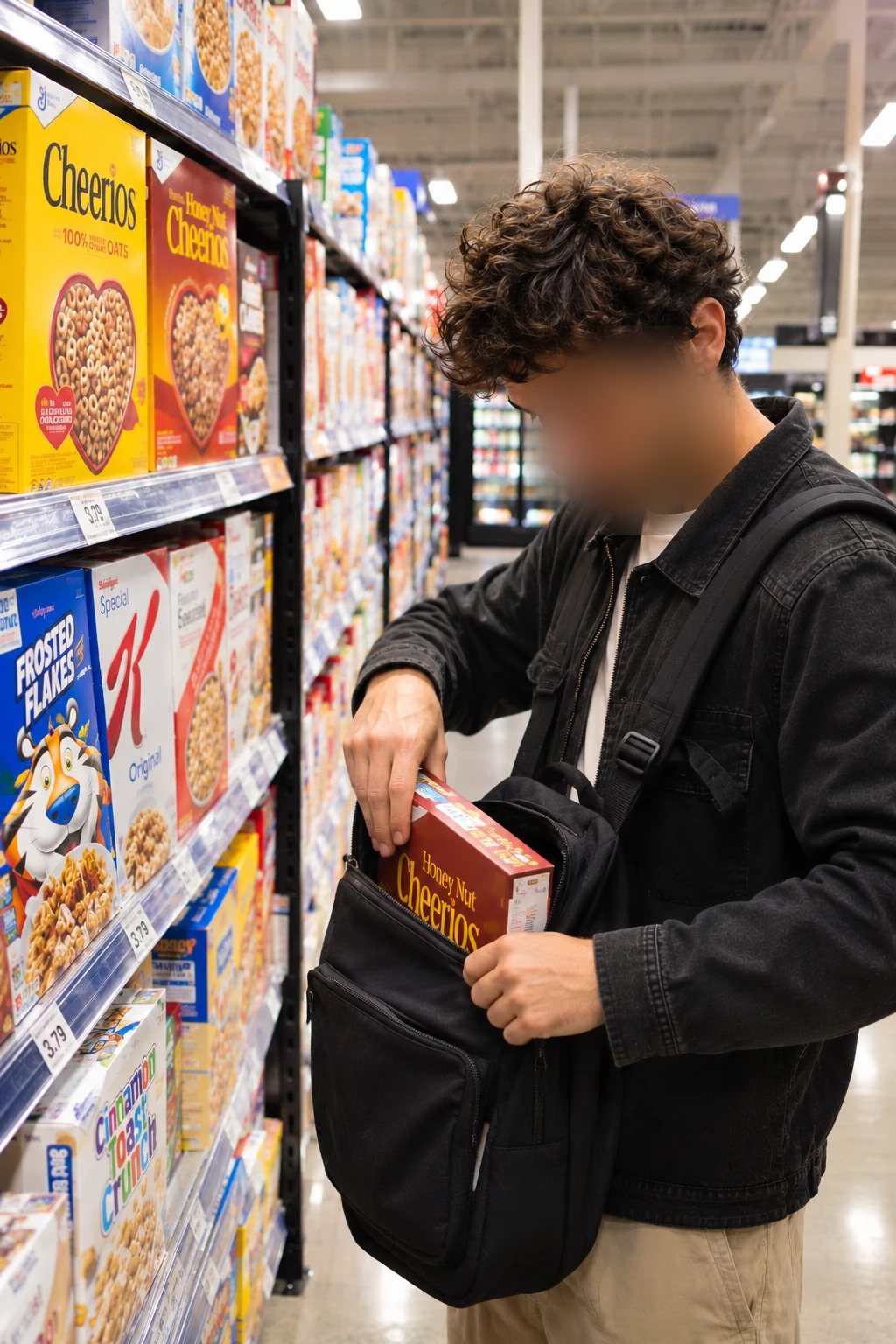
Veesion does not process biometric data
We do not process any biometric data, and our system does not make it possible to identify individuals (“this is Mr. X”). Only individuals’ gestures are analyzed by our solution, and this is done in an anonymized manner, so without taking any biometric characteristics into account. Our system makes it possible to determine whether a particular gesture took place in the last 10 seconds.
Read moreCollapse
Our solution only flags a point of attention to qualified store staff when a suspicious gesture is recognized: it is therefore not the solution that makes it possible to identify an individual but a human intervention, as is already the case with existing video protection systems.
Insofar as our system does not make it possible to identify individuals, this is not biometric data within the meaning of Article 4(14) of the GDPR. Our data processing must be distinguished from biometric processing systems, insofar as processing biometric data implies a purpose of uniquely identifying or authenticating a person, which is not our case.
The Veesion solution is built on different intelligence building blocks that detect suspicious gestures without ever identifying individuals
Our technology is built on the combination of several intelligence building blocks within a single “end-to-end” algorithm. Each building block (called a “component” below) has a defined function and communicates with the others in order to “understand” human behavior, more precisely to determine the occurrence of a gesture, associated with suspicious or normal behavior.
Component 1: human detection
The first component detects the presence of the various individuals in the field of view. If there is no individual, the other components are not activated.
Component 2: pose estimation
The second component classifies the pixels of each image in a video sequence as a numerical value. Each class corresponds to a part of the body. For example, class 1 will correspond to the left arm (numerical value: 1), class 2 will correspond to the torso (numerical value: 2), and so on.
Read moreCollapse
In this way, component 2 assigns each pixel the numerical value of the most likely class. Even though some pixels will be misclassified (a pixel at the junction of the torso and a leg, for example), on average component 2 will be able to estimate the location of the left arm, the torso, the legs and so on in the image.
The precision of this component is sufficient to recognize and locate each part of the body in order to contribute to identifying a specific gesture. However, it is not at all sufficient to recognize the same body part of a particular individual across several images. Component 2 can only infer “the left arm of individual XYZ (unidentified) is moving in this direction,” but it cannot infer “this left arm is exactly the one I saw in this other image (let alone on another camera) and it is the arm of individual XYZ.”
Component 2 produces a numerical representation of each part of an individual’s body as a numerical matrix for each image in a video sequence. With the visual representation of component 2, you can see the approximate, but sufficiently precise, classification of each pixel to contribute to identifying a gesture. This relative approximation (which is not an obstacle to identifying gestures) also accumulates, because each body part will be subject to a few classification errors (the wrong class assigned to a few pixels). It is therefore impossible for component 2 to identify the body parts of a given individual and turn them into a biometric signature that would make it possible to identify and recognize that individual across different images: this is not useful for our use case, and it is technically very complex given the resolution and image quality of the cameras installed in stores.
Component 3: object recognition
The third component has been trained to identify objects of interest such as a backpack, a handbag, a tote bag, a shopping bag or cart, a stroller, the shelf, items taken from the shelves, and so on. This component determines whether an alert needs to be generated in a given situation.
Read moreCollapse
For example, component 2 indicates that an individual’s left arm has entered a “shelf” object, and component 3 indicates that the left arm is now holding an “item” object that came from the “shelf” object. Then component 2 indicates that the left arm and hand are moving toward a “backpack” object, after which the “item” object no longer appears in the image. An alert is then generated.
Secondary components
These components add contextual elements to the analysis to maximize the detection rate and minimize the number of false positives (false alerts). Contextual elements can be, for example, an estimate of the distance to the camera or the type of store where the scene takes place. These elements are not central to the algorithm’s decision process, but they help the three components described above.
Veesion’s technology analyzes gestures only, never individuals
Veesion’s technology is based solely on algorithmic processing of gestures. The company uses neither facial recognition nor identity recording.
Artificial intelligence serves its clients as a decision-support tool
Artificial intelligence can bring remarkable advances and is already, in many cases, a valuable decision-support tool for people. Veesion remains convinced that the last word must belong to a human being. Clients therefore remain free to make the decision that seems most appropriate to them based on the alerts sent by the artificial intelligence.
The technology does not aim to automate certain tasks of store employees: it is a genuine decision-support tool, which aims to fight shoplifting while reinforcing the safety of consumers in stores. At no point can Veesion’s technology replace human decision-making.
No decision is therefore automated.
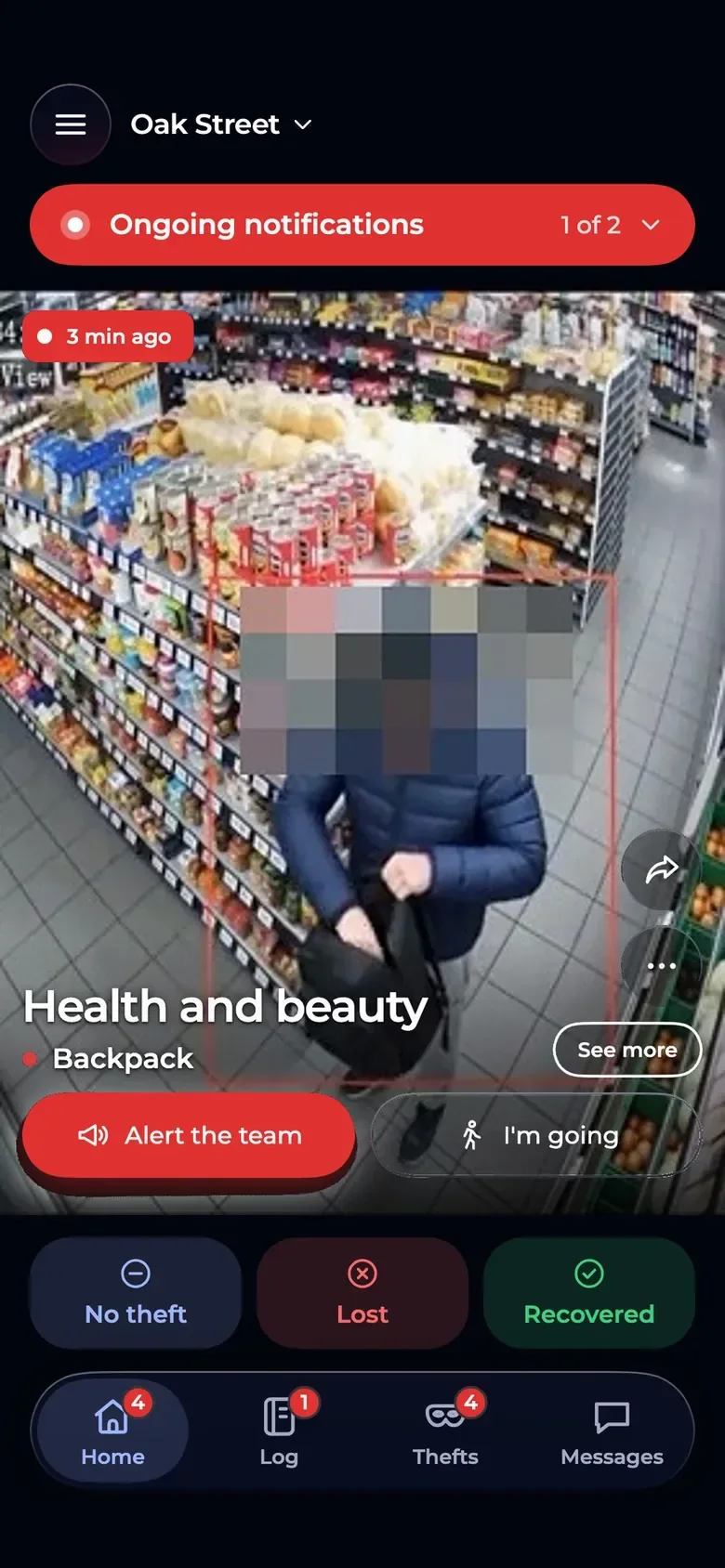
Veesion’s technology has the same purpose as existing video protection systems
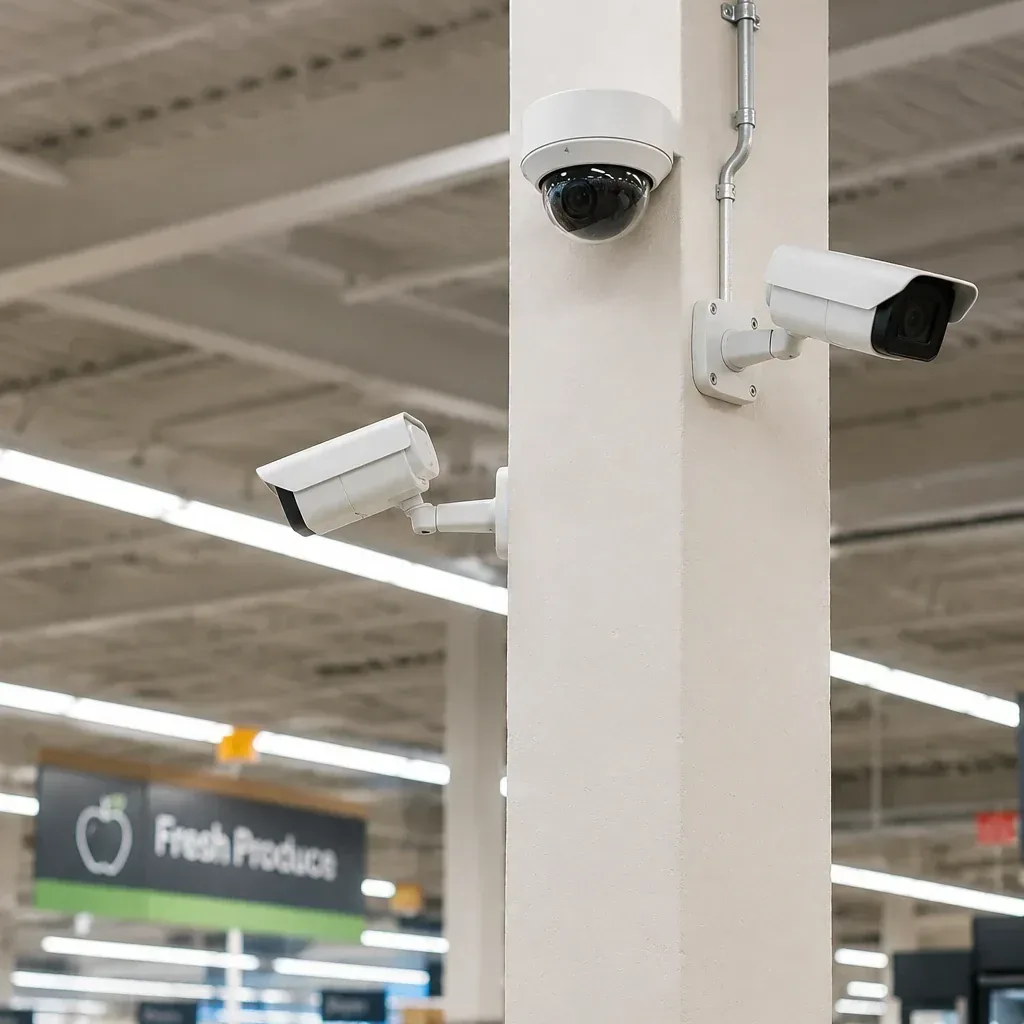
Our technology analyzes the images from the video protection system that stores and their security staff already have. Veesion’s technology has the same purpose as this system: ensuring the protection of property and people.
The alerts produced by Veesion are intended only for security managers, security officers or members of the store’s management. This restricted access is part of respecting the privacy of customers and staff.
Commitment to continuous innovation through Active Learning
At Veesion, we are committed to constantly improving our artificial intelligence technologies through Active Learning, a learning method that allows our AI to adapt and evolve when it meets new data. This process, which relies on annotating anonymized production video, keeps our solution up to date and able to respond accurately to the challenges of real-time detection.
Transparency in the annotation process
We annotate video while rigorously respecting confidentiality standards, in accordance with the GDPR. This essential manual check is carried out on data that has already been anonymized, to ensure the integrity and protection of personal information.
Continuous improvement in performance and reliability
Annotation is central to our research and development (R&D) approach: it allows us to calibrate our AI systems precisely and to continuously improve their reliability. Every annotated video sequence helps reduce false positives and improve detection, in every type of store.
See it on your own cameras
A demo on your store, your aisles, your cameras.
Thank you, that is sent
We review every request. If Veesion is a fit, our team will get back to you within 48 hours.
Finding a time with our team
Your request is in. We are checking whether a slot is available for your region.
Pick a time that suits you
Your request is in. Book a call with the team for your region.